Rohhna Barkwald
The innate capacity of brain and body to see new ideas, patterns and connections — as wholes.
Tests whether an idea is not merely brilliant on paper, but viable, ethical and sustainable in reality.
Incomplete ideas are thrown into the air again, re-tested and refined until everything rings true.
A fully unfolded mind that works freely — without cognitive blind spots or overload.
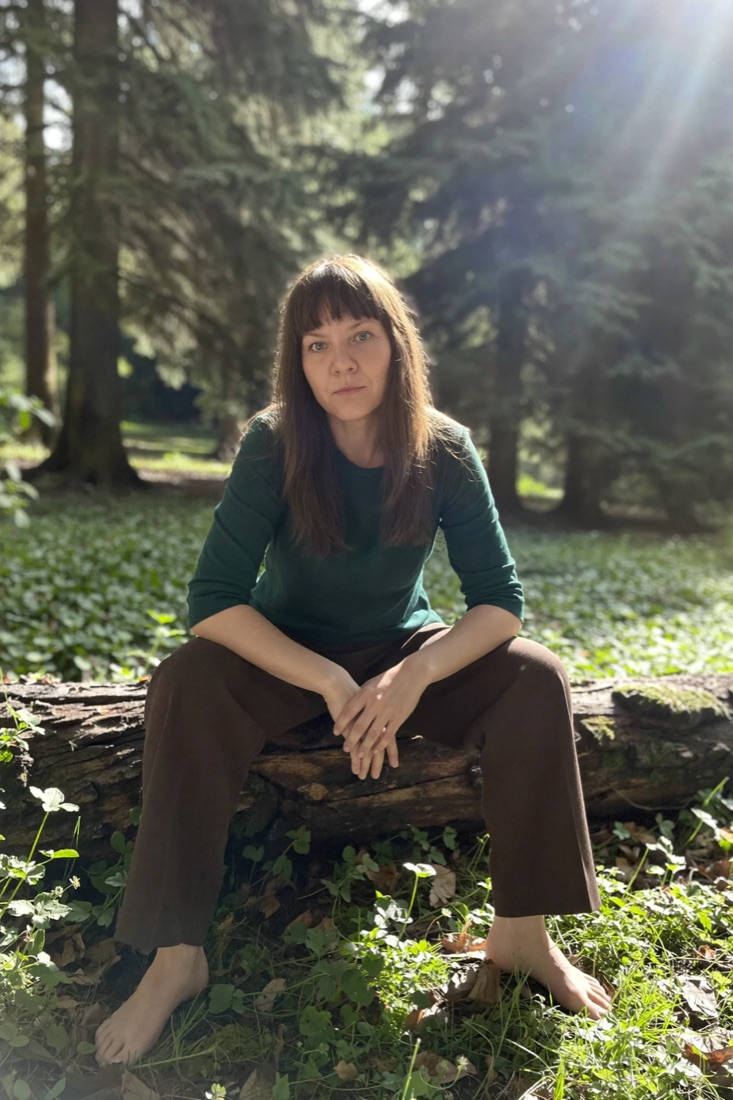
I design systems that function as living organisms.
Regenerative, interconnected, fractal. Not as a theoretical exercise, but as concrete architecture.
My walls carry white cards in precise formations. Each card is an idea, a function, a connection. They hang in clusters that over time find their own inner order — like a living system organising itself.
I have tailored my own education to understand, explore and master my innate abilities. Where most education divides knowledge into silos, I have chosen the whole. Synthesis requires freedom from disciplinary boundaries — and the most important connections lie precisely in the gaps no single discipline covers.
Futures backcasting
I do not begin with the problem. I begin with the highest possible: the optimal end state, seen clearly before it exists. From there I work backwards to the reality of today and find the parts that must be transformed and the ones that must be invented.
Problem-fixing asks how we make the car less harmful. Futures backcasting asks what the optimal way to move people through landscapes would be. What is optimal is a larger equation, solved in relation to the organism we ourselves are part of.
Seeing what does not yet exist is an ability I have trained. The mathematician calculates with imaginary numbers that lie on no number line, and still arrives at solutions that could not be found otherwise. That is how I work with the future.
Whole-systems thinking

Transdisciplinary thinking
Multidisciplinary thinking places the disciplines side by side. Interdisciplinary thinking weaves them together. Transdisciplinary thinking goes beyond them: it dissolves the boundaries and draws on knowledge from research, practice and the people who live within the system, so that whole systems can be seen as one.

Systems thinking
Sees something as a system: the parts and the relationships between them. The more parts that interact, the more complex the system becomes, and the more can emerge that no single part could create alone. Systems thinking shifts the gaze from taking things apart to understanding how they work together.

Systemic thinking
Sees the patterns and the bigger picture, where everything belongs together and every piece counts. When a large system keeps producing the same outcome over time, it is rarely down to one mistake, but to pieces that carry the wrong code. They give not just a wrong picture, but a wrong result. That is why each part must be designed to fit into a larger whole. Only then can the whole become greater than the sum of its parts.

Systemic architect
This is the title I have chosen for my work. I think within systems and across them, and I connect futures backcasting with the three ways of thinking in wholes.
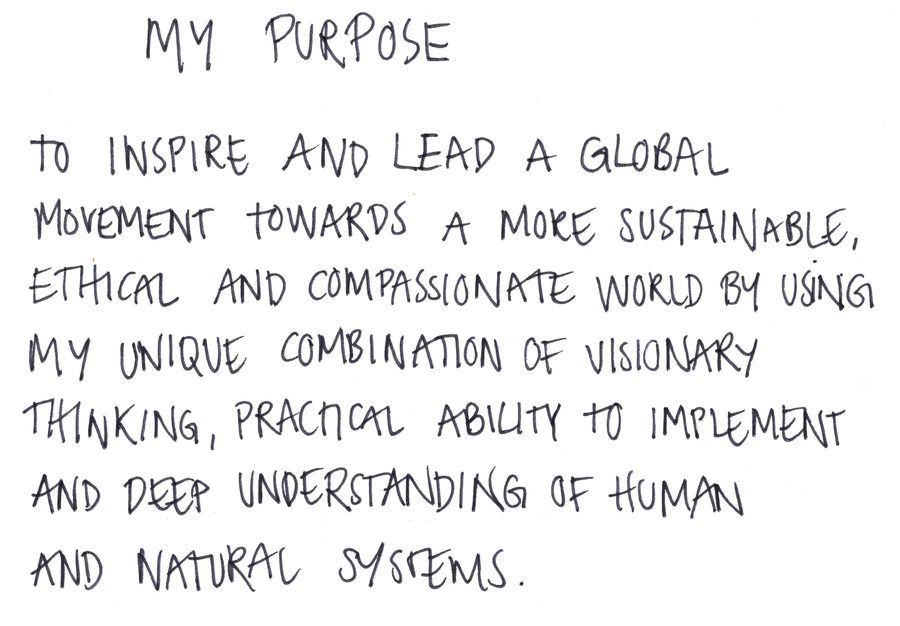
My goal is coherence: between people, between systems and with the organism we ourselves are part of.

Mind
The Undivided Mind
The world's crises are interconnected. But the institutions tasked with solving them are fragmented into silos. What if the problem is not a lack of knowledge — but a lack of integration?
A Blueprint for a Connected World
What would economics look like if it were designed as a living system rather than a machine?
The foundation for a global platform currently under development.

The books are not the goal.
They are the foundation.
The intellectual architecture behind a complete platform for how humanity can reorganise itself: economically, ecologically and socially.
Not a manifesto. A blueprint.
Operational and ready to be built.